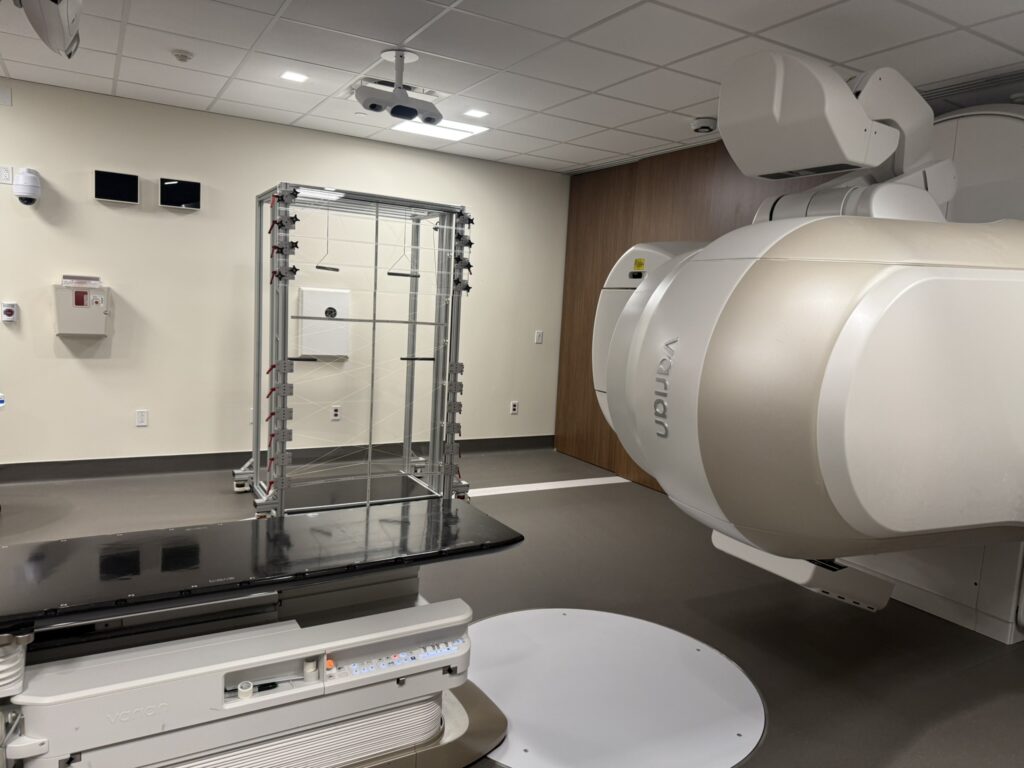
 Eastpark Medical Center has delivered its first treatment using a newly engineered frame designed specifically for Total Skin Electron Therapy (TSET), offering patients with mycosis fungoides a more precise and customizable care option close to home.
Mycosis fungoides is a rare form of cutaneous T‑cell lymphoma. While uncommon, the condition is highly responsive to electron‑based radiation therapy, which can be both symptom‑relieving and, in some cases, curative when detected early. Because the disease involves the entire skin surface, TSET requires a unique treatment setup unlike any other procedure in radiation oncology.
Until now, patients receiving this therapy were treated exclusively at University Hospital using a large wooden frame. With increasing referrals and expanding services at Eastpark, the department embarked on a project to build a new frame designed for modern needs. Clinical physicist Abby Besemer, PhD, worked closely with clinical engineer Kyle Schaefer to re‑imagine the design from the ground up.
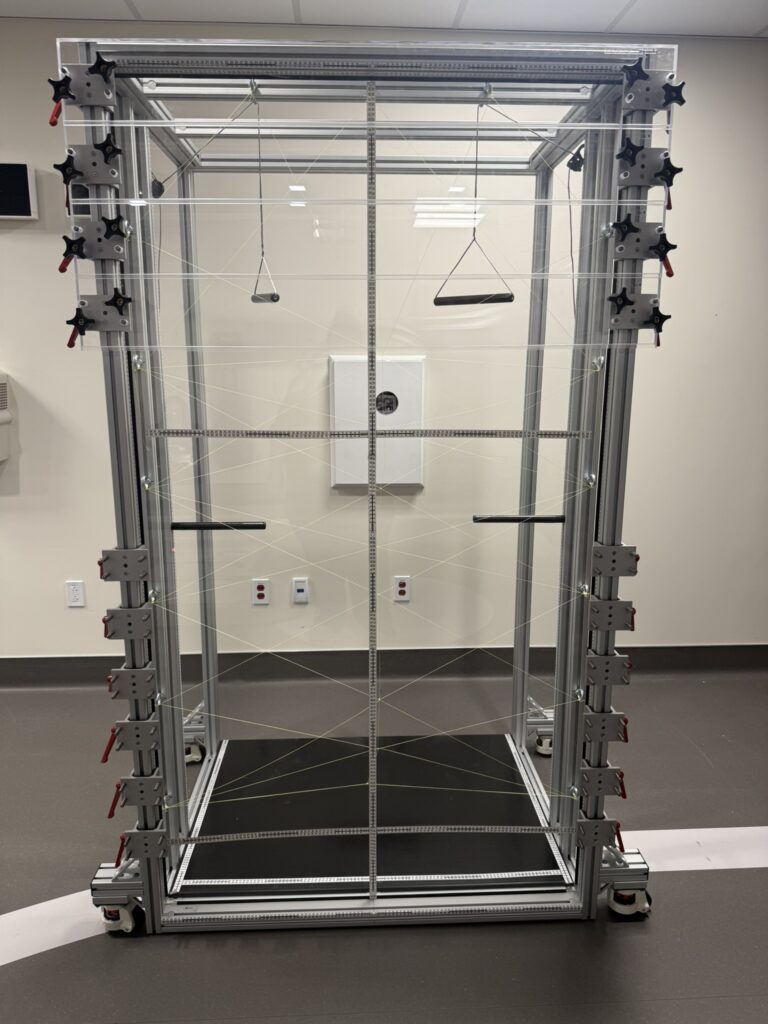
“This is one of the most unique treatments we do,” Besemer explained during commissioning. “The patient stands inside this specialized frame in several different poses so the radiation can cover the entire skin surface. The new frame needed to be easier to position, more adaptable, and able to accommodate different shielding configurations.”
The result is a fully custom, modular system featuring adjustable acrylic shielding panels which allow clinicians to treat only the areas affected by disease when appropriate. This is especially helpful when there are no lesions on the patient’s head, allowing us to shield that area to reduce the radiation dose and help prevent hair loss. The clear panels also offer enhanced patient visibility for the care team to monitor the patient and the new adjustable handholds increase patient stability and comfort during the treatment.
Commissioning the new frame required a month of intensive effort, including multiple weekends of measurement and calibration by the medical physics faculty and residents. Using a full‑body anthropomorphic phantom, the team verified that the system delivers a uniform dose to the skin while minimizing exposure to deeper tissues.
The work paid off. Eastpark successfully treated its first patient last month, marking a significant expansion of its advanced radiation therapy capabilities.
“This frame gives us flexibility we’ve never had before,” Besemer said. “It’s exciting to offer this specialized care at Eastpark.”